As the Philadelphia Flyers head into the upcoming Olympic break, their recent stretch has perfectly captured the fans’ aggravation surrounding this season. A 4-8-2 January exposed a team capable of beating the league’s best and losing to teams it should handle. Wins over contenders like the Colorado Avalanche and Utah Mammoth showcased the Flyers at their ceiling. Losses to struggling opponents such as the New York Rangers highlighted how far they still have to go.
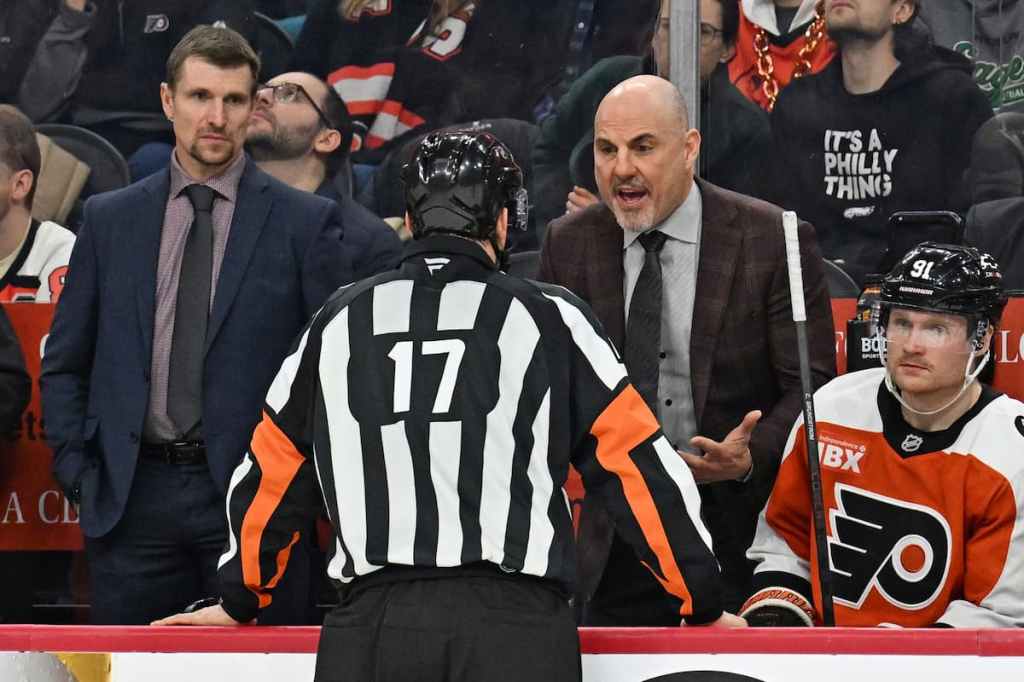
That inconsistency has pushed head coach Rick Tocchet into the spotlight, especially following his blunt postgame comments after the January 31 loss. Tocchet didn’t sugarcoat what he was seeing:
“We can’t afford to play our own game. We just can’t. It’s not an individual sport. We have too many guys — and they don’t mean to do it — but they have to understand we have to play a certain way if we’re gonna compete.”
Those words landed heavily with a fan base already split on whether Tocchet is part of the problem or simply delivering hard truths during a rebuild.
But the losses, particularly against weaker teams, have followed a troubling pattern. Defensive coverage loosens. Puck management erodes. Pressure moments expose hesitation and individual decision-making. Tocchet has repeatedly pointed to those habits as the core issue, not talent or effort.
Those patterns are where criticism of Tocchet becomes fair. Accountability cuts both ways. If players are consistently “playing their own game,” that’s not just a roster issue, it’s a coaching one. Systems aren’t merely installed; they’re reinforced, corrected, and adapted. Five months into the season, the Flyers are still failing the same tests.
That tension has been magnified by an increasingly awkward dynamic with star winger Matvei Michkov. Early in the season, both Tocchet and the organization openly questioned Michkov’s “shape” and conditioning, framing it as a developmental hurdle that would be addressed with time. That was five months ago. The messaging hasn’t changed, and neither, it seems, has the trust.
Michkov’s usage has bottomed out, and his leash appears shorter than others. And while Tocchet has preached team structure, the Flyers’ most dynamic offensive talent often looks constrained rather than empowered. That raises a difficult question for a rebuilding team: Are standards being enforced or is development being stalled?
To be clear, Michkov isn’t above criticism. Off-ice habits matter. Defensive habits matter. Two-way play matters. But rebuilding teams don’t have the luxury of mishandling elite skill. If the Flyers are still questioning their cornerstone player’s readiness months into the season, that points to a disconnect somewhere between coaching philosophy and organizational priorities.
The bigger picture is uncomfortable. The Flyers are competitive, but not cohesive. Motivated against contenders, but unfocused against teams they should beat. That inconsistency suggests a group unsure of its identity, or at the very least, unconvinced by it.
The Olympic break arrives at a pivotal time. It offers a reset, but also a potential reckoning. Either the Flyers emerge with clearer roles, stronger buy-in, and tangible growth or the same postgame quotes will keep resurfacing.
So, should the finger be pointed at Tocchet more than before? Not because the rebuild is failing but because five months in, the excuses are thinning. Accountability without adjustment becomes stagnation.
And if the Flyers want this rebuild to accelerate, the tension — especially with their brightest star — can’t remain unresolved much longer.